


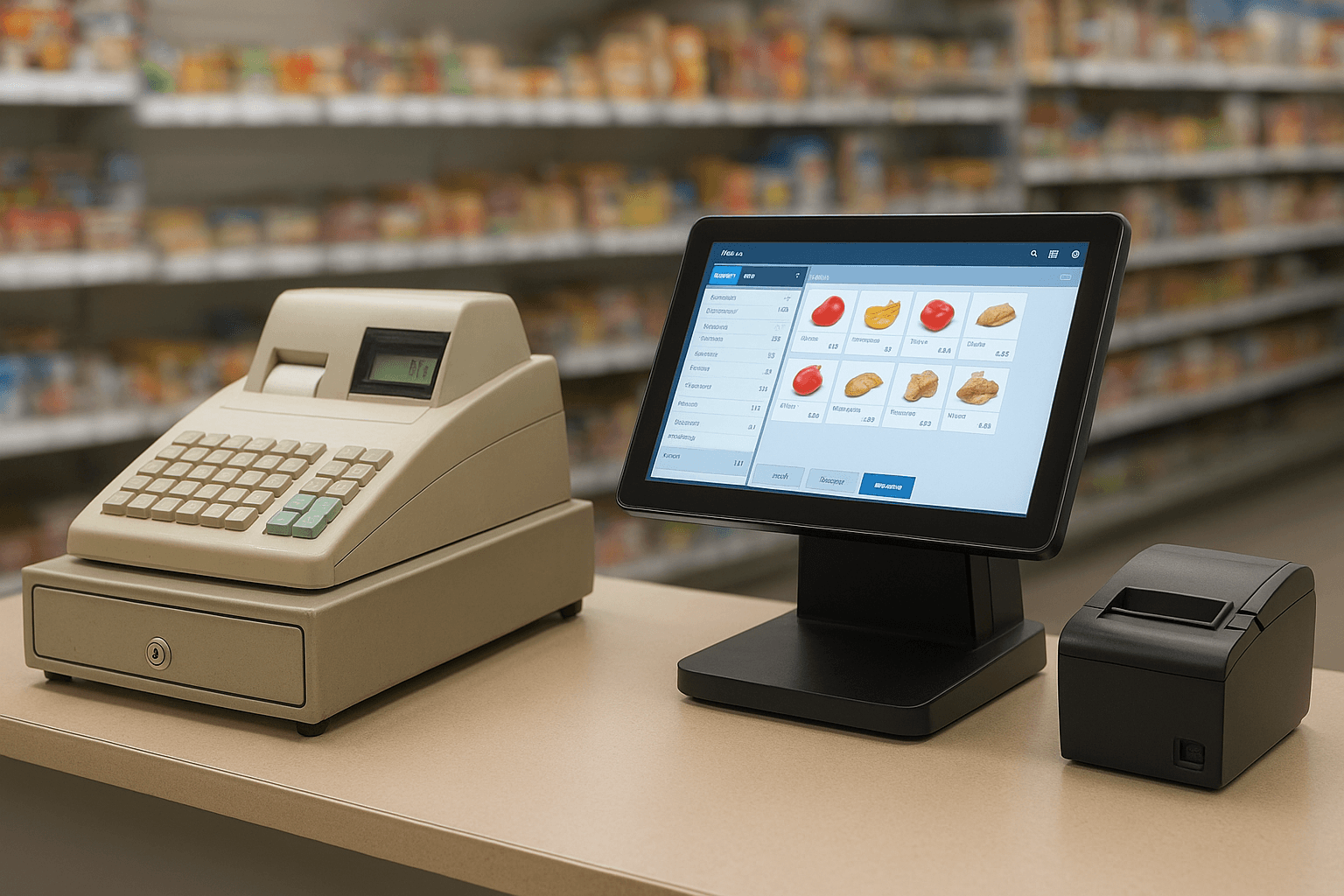

As the retail industry evolves and customer expectations rise, supermarket checkout systems are undergoing a significant upgrade. From traditional cash registers and simple electronic tills to modern, feature-rich smart POS systems, supermarkets are enhancing checkout efficiency, data management, and overall customer experience.
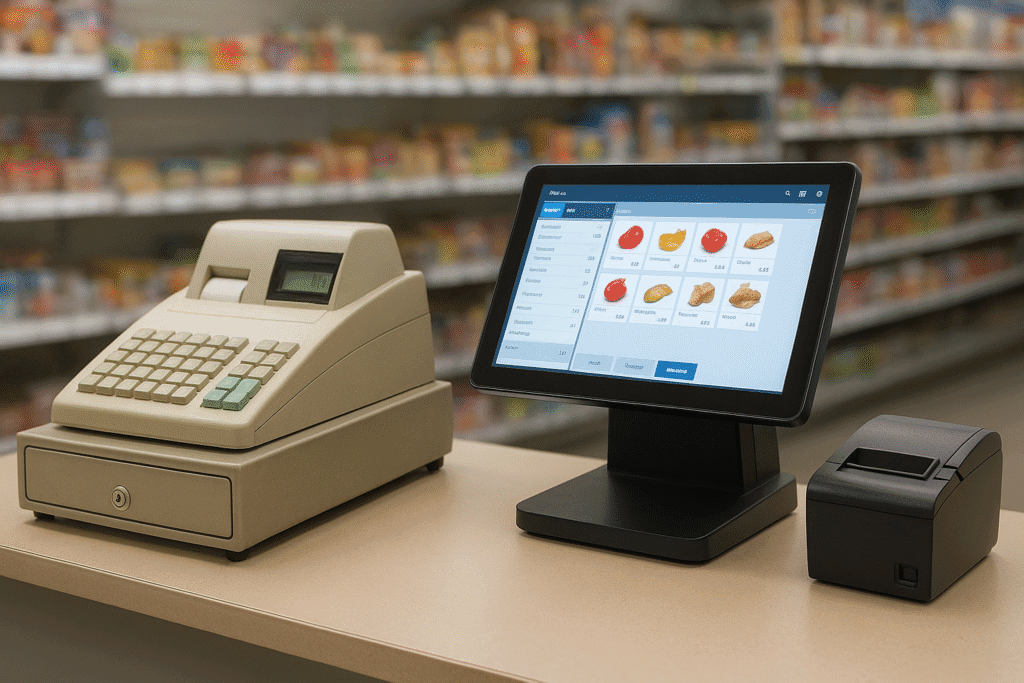
1. Limitations of Traditional Cash Registers
Traditional cash registers or basic electronic tills can handle simple transactions but have clear limitations:
- Low Efficiency
Cashiers must manually enter prices or scan barcodes. Processing discounts and loyalty points can be error-prone, slowing down checkout during peak hours. - Limited Data Reporting
Sales and inventory often rely on manual recording, making real-time inventory management and sales analysis difficult. - Suboptimal Customer Experience
Customers cannot easily view product details, promotions, or loyalty points, reducing interaction and engagement at the checkout.
2. Advantages of Smart POS Systems
Modern smart POS systems integrate touchscreens, network connectivity, and software solutions, combining checkout, inventory management, member management, and marketing functions in one device.
- Efficient Checkout
Support for barcode scanning, NFC payment, mobile wallets, and loyalty programs accelerates transactions and reduces queues. - Real-Time Data Reporting
Every transaction is automatically recorded, generating instant sales reports and inventory updates for better retail technology-driven decision-making. - Enhanced Customer Experience
Dual-screen POS setups display product information and pricing on the main screen, while the customer-facing screen can show promotions, advertisements, or loyalty rewards, improving engagement. - Flexible Hardware Integration
Expandable with printers, barcode scanners, electronic scales, card readers, and other peripherals to meet diverse supermarket needs.
3. Real-World Upgrade Examples
Many large supermarket chains have upgraded from traditional cash registers to smart POS systems:
- Quick scanning via touchscreen POS enables near-instant checkout.
- Member accounts and loyalty points synchronize in real-time, increasing customer retention.
- Automatic stock alerts reduce out-of-stock situations.
- Promotions and new product recommendations can be displayed on customer-facing screens, boosting sales opportunities.
These upgrades demonstrate that smart POS systems not only improve operational efficiency but also enhance the shopping experience and provide managers with comprehensive, data-driven insights.
4. Trends in Supermarket Checkout
Future supermarket checkout systems are expected to evolve in several ways:
- Omnichannel Integration
Seamless connectivity between online and offline stores allows unified data management. - Intelligent Analytics
AI-driven retail technology can analyze sales patterns and optimize promotional strategies. - Self-Checkout and Automated Checkout
Self-checkout POS machines and automated checkout solutions reduce labor costs while improving efficiency. - Personalized Marketing
Systems can recommend discounts and products based on individual shopping habits, enhancing loyalty and engagement.
5. Conclusion
The shift from traditional cash registers to smart POS systems marks a crucial step in modernizing supermarket operations. Smart POS not only increases checkout efficiency and improves inventory management, but it also enhances the customer experience. With continued technological advancements, supermarket checkout will become more intelligent, convenient, and data-driven, creating new growth opportunities in the retail sector.